


Unexpected recreations
Discover unexpected recreations in and around the Broads in the 19th century.
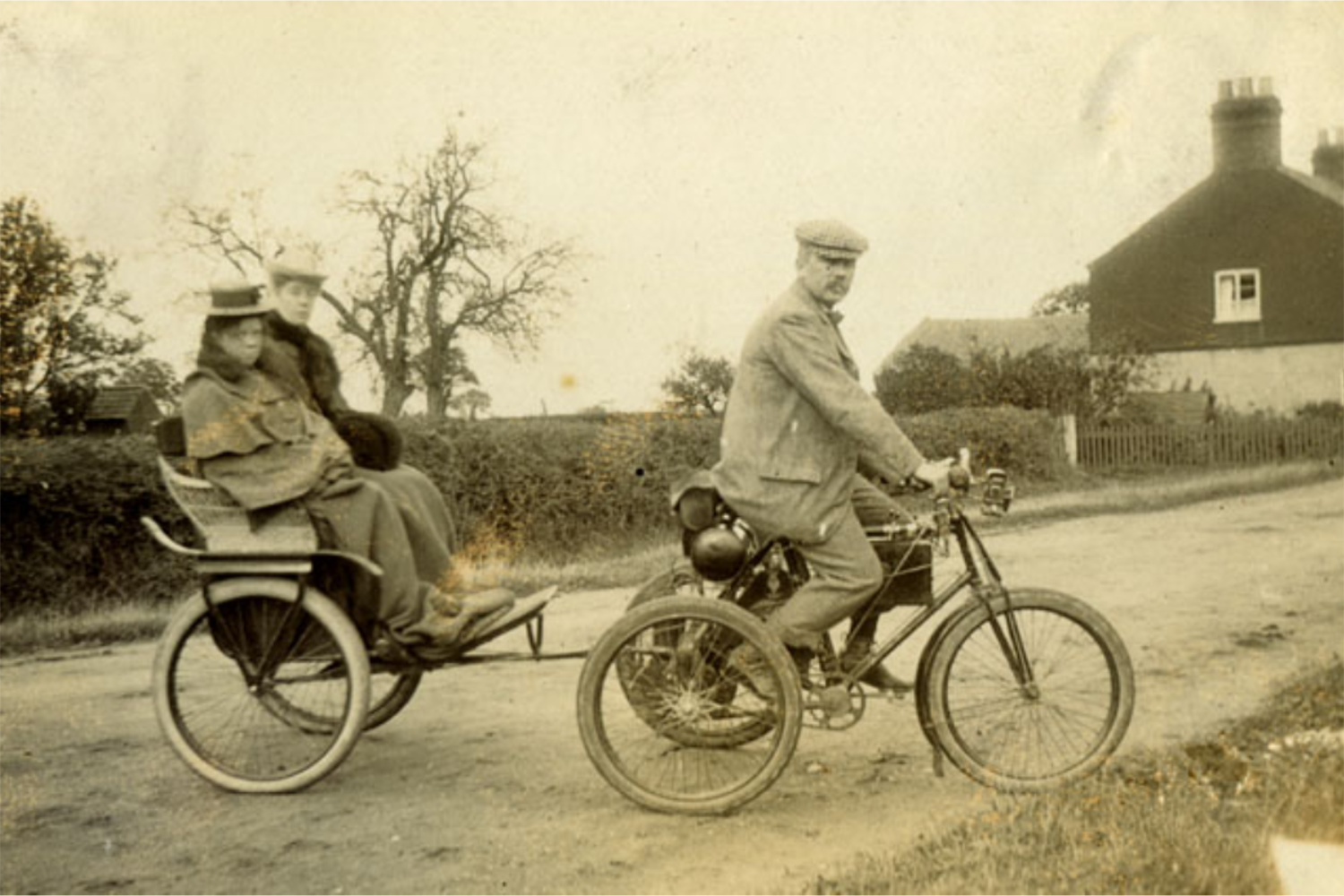
Work outside and inside the home predominated for many in the 19th century, but there was some time for recreation. Though we often think of marshmen, reed cutters, thatchers, millwrights, eel catchers, wherrymen and others in terms of their working life, they and their families must have been involved in other activities too, if not actually participating, then watching the unexpected goings on such as…
Camping
Camping matches, as practised in the Broads, had nothing to do with tents! Camping was a violent ball game, the precursor to football, or rugby, or both. It was peculiar to East Anglia from the Middle Ages onwards and was still being ‘played’ in the Broads until the early 19th century.
The rules are vague. Certainly, the object was to propel the ball into the opponent’s goal, but nobody is quite sure whether the ball was kicked, thrown or punched. However, what is known is that it was perfectly permissible to kick, throw or punch your opponents! Players were usually referred to as ‘combatants’, and ominously, only unmarried men were allowed to participate. Teams could be centred on a parish or village. Indeed, some parishes had designated camping fields, usually close to the church.
In 1815, a crowd of between 2,000 and 3,000 spectators watched a 24-a-side match held at Ranworth. They must have left disappointed, as it was reported that “neither party goaled the ball, and it was decided by a bye.” More of a flavour of the game comes from a press report of a camping match at Ranworth in 1822, describing “half an hour’s excellent sport, which produced some good set-tos and a few bloody noses.” In June 1822, 10 men from Ranworth, playing at home, took on a team of 10 men from the neighbouring parishes. Clearly the Ranworth men were formidable as Ranworth won! Indeed, Ranworth was somewhat the centre of the sport.
But if Ranworth was the home of camping then the premier side of the time were the men of the Blofield Hundred. The Blofield Hundred was all the parishes north of the River Yare from Thorpe to Limpenhoe, including Brundall, Cantley and Strumpshaw. They had got off to a shaky start though. In 1806, they were scheduled to meet the men of the Taverham Hundred, away from home at Crostwick, for the grand prize of a hat worth 10s 6d for each winning combatant. But the affair ended in an easy victory for Taverham “owing to the absence of the Blofield men.”
Blofield’s arch-rivals were the men of the Tunstead and Happing Hundreds, which comprised fellow Broadsmen from Stalham, Hickling, Ludham and Potter Heigham. In July 1822, Blofield meet Happing in front of a crowd of 6,000 at Ranworth. The result is indecisive. As the press had it, “so closely were the men (ten a side) matched for strength, courage, skill, and activity that the ball was nearly in the centre of the ground when time was called and play stopped”. Clearly a re-match was called for. So, in September 1822, Blofield and Happing meet again, this time at Worstead. And the winners were… Blofield! The excitement was so intense that one of the crowd died on the spot.
But by 1831, Blofield have lost their fire. In August of that year they meet Norwich at Norwich… and Blofield give up! The press aren’t impressed, reporting “neither the camping nor the subsequent wrestling were either of them well contested.” And sadly, that is the last we hear of the grand Broads tradition of camping matches.
Perhaps the combatants finally realised that the injuries just weren’t worth it, to the great relief of mothers and sweethearts. Interestingly, I haven’t come across any photos of camping, perhaps because it seems to have come to an end around the time of the beginnings of photography.
Ballooning
During the balloon craze that swept the country following the first manned flight of 1783, the Broads area was popular with balloonists, not for balloon ascents but rather balloon descents. One of the first British balloonists was Major John Money of Trowse, near Whitlingham on the edge of Norwich.
The aspiring ‘aeronaut’ would launch his or her balloon from one of the many pleasure gardens in Norwich or Great Yarmouth, where they were guaranteed a large, presumably paying, crowd of spectators (actual participation in ballooning was definitely an activity usually only indulged in by wealthier people). Then, with luck or skill, they were nearly guaranteed an unobstructed landing amongst the flat, treeless marshes of the Broads, or in the open parks of the manorial halls that were scattered throughout. There were balloon descents at Beighton and Brundall in 1825; on the marshes at Oby in 1831; at Coldham Hall in 1849; on Mautby Marshes in 1852; and at Wroxham Park and the marshes at St Benet’s Abbey in 1862.
What the local people thought about these great gas-filled monsters cascading on their marshes is sadly not recorded.
Velocipedes and more…
On 16 January 1869, Messrs Jolly and Son, coachbuilders in Norwich, announced in the Norfolk Chronicle that they had taken delivery of some of the newly invented velocipedes, direct from their French manufacturer.
A velocipede was an early bicycle, the main difference being that the pedals were fitted to the axle of the front wheel. They were made almost entirely of wood, or with a wrought iron frame and wooden wheels. Consequently, there was very little in the way of suspension, and for this reason the velocipede quickly became known as ‘the boneshaker’.
Undaunted, Mr Jolly decided to promote his new purchases by riding a velocipede from Norwich to Great Yarmouth by way of Acle. The excursion took two-and-a-half hours, including the fifteen-minute stopover at Acle. He argued it would have been much less but for high winds… and the roughness of the roads… Clearly the boneshaker was living up to its reputation.
Nevertheless, the velocipede caught on. Jolly and Son began manufacturing them and, at a race meeting in May of the same year, a Mr Kent of Beccles rode his velocipede to Norwich, won his race, and rode back home to Beccles again. The European bike craze of the 1860s had finally reached the Broads!
The velocipede went through many evolutions, no doubt with many thrills and spills, and scaring of horses. Front wheels got larger until the high-wheeled ‘penny farthing’ became the thing to have. But it was not until the invention and commercial success of the ‘safety bicycle’ after 1885, that cycling really began to have an impact in the Broads.
The safety bicycle was very similar to a modern bicycle. Its pedals turned a chain which drove the back wheel. It was called the safety bicycle because the rider sat closer to the ground, so if you did fall off you had a shorter distance to drop than if perched up on top of a penny farthing. It almost instantly became popular with men, women and children.
Through cycling, people became much more mobile and independent. Some went out to show off their new bikes, while others used their bikes to spread their ideas further afield, but probably the most significant impact of cycling in the Broads (as elsewhere) was its role in the development of the tourism industry. In 1900, the Railway Hotel in Stalham advertised itself as a ‘Headquarters of the Cyclist’s Touring Club’.
In the 1870s there was even a vehicle called a ‘water velocipede’, later known as a water bicycle. The rider pedalled as on a bicycle and power was delivered to the water by a propeller or paddles. The Museum of the Broads at Stalham has a water bicycle dating from 1947. Visit the museum to find out more and discover many other aspects of Broads history.
Before leaving cycling in the Broads, it is perhaps worth mentioning that in 1954, the Reverend Harold E Winter wrote an article in the Norfolk Magazine asking why there were so many tricycles to be found in Hickling? Catfield and Potter Heigham, he states, have only one or two but Hickling has as many as 20! The answer, he sadly concludes, is that “it must go down as an unsolved mystery….”
Ice skating
Before we talk about the past, please remember that the Broads is never suitable for ice skating now. Please keep away from all frozen waterways, however small, or flooded areas that have frozen – they are dangerous.
Now, back to the golden age of skating in the Broads, at the end of the 19th century. From 1890 to 1895 it froze hard every winter, with a temperature as low as minus 19°C in Blofield. Skating during these years is rather routinely reported in the Norfolk Chronicle as “everywhere general”, but in January 1895 so large were the numbers of skaters on Wroxham and Surlingham Broads that it made the papers!
Skating was now very much an event, even the focus of a holiday. The practice of flooding grazing marshes in the winter created safe and shallow ice rinks when they froze. Farmers cashed in by replacing the wheels on their carts with runners, ‘bumbling’ their horses’ hooves (wrapping them in sackcloth), so that they didn’t slip, and offering sleigh rides. Entrepreneurs set up booths on the ice with fires inside (Suffling reports the ice as being three feet thick in some years). The booths were open-ended, so that the skater could skate straight in, take a seat on an upturned barrel, purchase roast steak and ale, and skate on out again when suitably refreshed. Parties went on tours of local villages, skating along the frozen rivers, and it seems that the Diss Mere ice carnivals were copied on a smaller scale at many localities.
Such was the appeal of skating in the Broads at this time that fashionable skaters living in London were encouraged to visit. Hickling Broad was always recommended, both for its emptiness and the clarity of its ice. If the weather was right, they were advised to take the earliest train from Liverpool Street to Norwich, with their skates packed and ready….
So, in many ways, perhaps cycling and skating (if not camping matches and ballooning) were nearly as important to the development of the Broads as a holiday destination as boating.
Robin Jeffries, Visitor Services Officer
Sources
- East Anglian Magazine, volume 21, 1962
- The Handbook to the Rivers and Broads of Norfolk and Suffolk by George Christopher Davies, Jarrold, 1882
- Kelly’s Directory 1900: Stalham
- The Land of the Broads by Ernest R Suffling, Upcott Gill, 1887
- museumofthebroads.org.uk
- Norfolk Annals: A Chronological Record of Remarkable Events in The Nineteenth Century (compiled from the files of the Norfolk Chronicle) by Charles Mackie; volume I, 1801-1850; volume 2, 1851-1900
- The Norfolk Magazine, July-August 1954
- picture.norfolk.gov.uk