


Connecting with the Broads
The Broads is all about connections and balance – nothing happens in isolation. Projects connect across the Broads Authority’s three responsibilities for conserving and enhancing the Broads, promoting understanding and enjoyment, and protecting the interests of navigation. Here’s news of a small selection of partnership projects. To find out more about all our projects go to broads-authority.gov.uk
Race against time
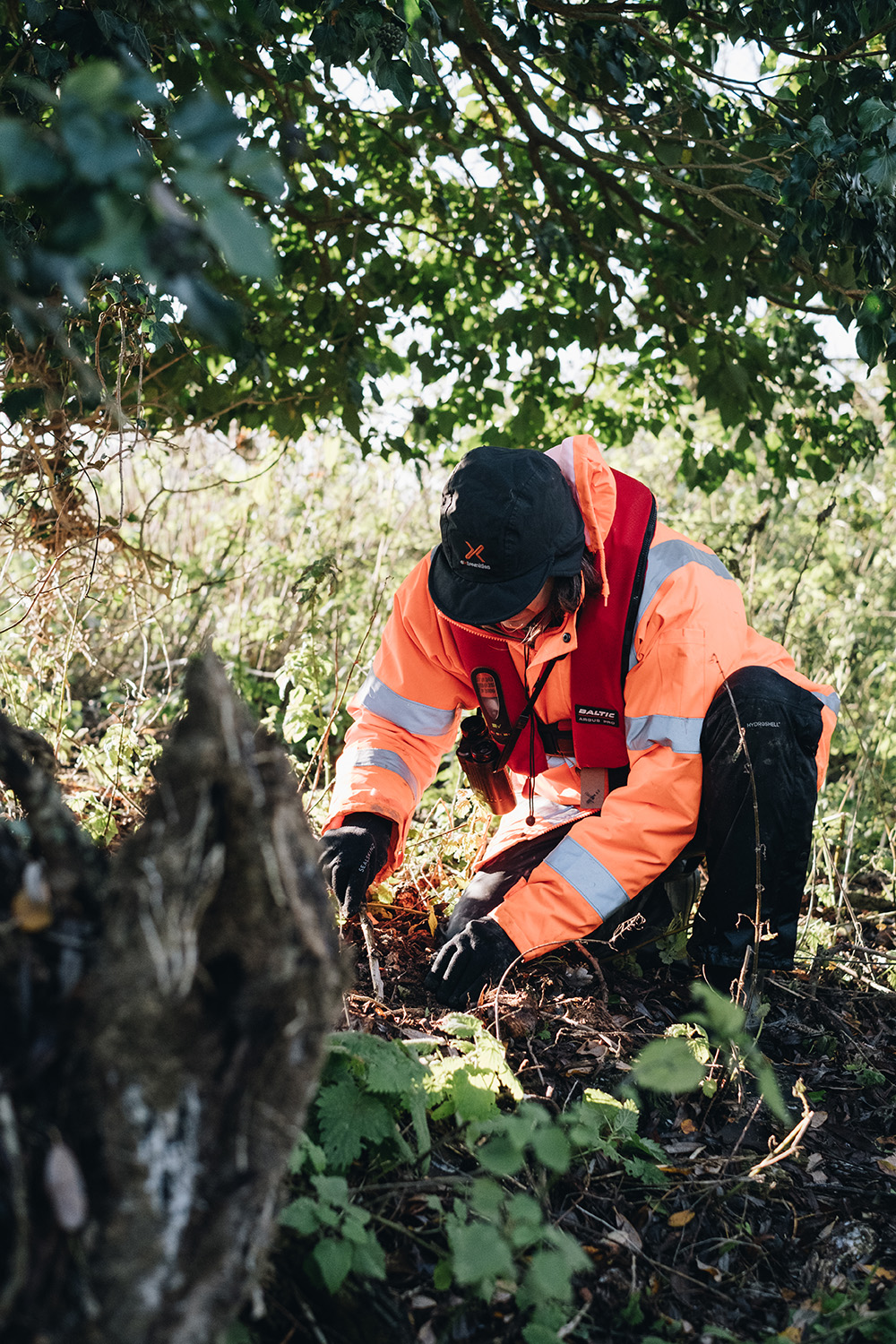
We often talk about the merits of slowing down, but this is one aspect where we need to keep pace and if possible, speed up.
The UK’s national parks became the first parks in the world to join the Race to Zero initiative, in summer 2024, committing to drive action to halve carbon emissions within their landscapes by 2030 and become significant net carbon sinks by 2050. Nature-friendly management across all 15 parks, and significant increases in the use of sustainable travel, renewable energy and sustainably produced food are all helping. UK national parks are committed to becoming beacons for a sustainable future, using their partnerships and convening powers to help meet the UK’s climate change commitments while also supporting thriving rural communities, helping to restore lost biodiversity and improving food security.
A report published in 2024 by Small World Consulting details the carbon footprint of the UK’s 15 National Parks and lays out a path to enable the national parks to meet the central ambition of the Race to Zero initiative (global net zero emissions by 2050) a decade early in 2040. The Broads Authority’s work towards achieving net zero spans our entire operations, from decarbonising the works programme, to helping local farmers to reduce carbon emissions from peat soils (see below) and working with local authority partners and the tourism industry. We’re also working to manage the impacts of climate change within the Broads area through the wider Broadland Futures Initiative.
For full details on all the national parks read the Small World Consulting report on our website.
broads-authority.gov.uk/news/broads-and-uk-national-parks-join-world-race-to-zero
Medieval to modern
Back in medieval times, peat was at the heart of the very formation of the Broads. Now we recognise its importance for the future.
From around the 12th-14th centuries peat was dug to provide fuel for heating and cooking. Rising water levels later flooded the peat diggings, forming the broads. Deep peat layers lie beneath a third of the national park, storing carbon and, when managed well, helping to combat the effects of climate change. The Broads Authority is working with farmers and landowners to raise water tables to return areas to peat forming conditions, secure water for wetland wildlife, lower emissions and capture carbon.
We want to encourage nature-rich farming and wet crops such as reed for thatching, particularly as water levels rise and winters get wetter. This is known as wet farming, or paludiculture. We’re increasing reed harvesting for thatch, and also enabling development of innovative products from wetland plant fibres, including new building and clothing materials. You can find details of our peat projects in a new section on our website all about peat (link below) and you can see one of our peat projects on a walk to Buttle Marsh at How Hill near Ludham.
broads-authority.gov.uk/looking-after/projects/broads-peat-partnership
Additional funding
These projects connect many Broads Authority responsibilities.
In spring 2025 we received news of an additional £1.3m of capital funding from the Department for Environment, Food and Rural Affairs, to be spent within the year, so in time for the visitor season 2026.
Several of these major projects relate to visitors, including improvements to Great Yarmouth Yacht Station, enhanced facilities at Acle Bridge and upgrades to 40 Broads Authority electric charging points at moorings.
A project to install solar panels for our Dockyard at Thorpe St Andrew will help in reducing our carbon footprint.
The funding is also supplying equipment to support management work to look after the Broads, including dredging equipment attachments, a new fen harvester to help maintain fenland, a remote-controller mower for tackling hard-to reach areas and some pontoons to help move equipment around the Broads.
Over the winter, separate funding from BMW’s Recharge in Nature project, which has supported the 15 UK national parks, enabled us to replace the electric drivetrains on two of our trip boats, Ra and Liana, to improve their reliability and reduce noise levels on board. The work was carried out by Landamores, who go back to the early days of Broads holidays, when in 1923 they began hiring rowing skiffs and half-deckers. The BMW scheme has also funded additional electric charging points for boats at Norwich Yacht Station and an electric vehicle charger at the Pleasure Boat Inn at Hickling.
The £359,500 three-year Broads Responsible Recreation Programme focuses on safeguarding the Broads internationally important wetlands from the growing pressures resulting from development around the Broads. Reducing environmental impacts from visitor activity while supporting sustainable enjoyment of the Broads is our focus.
broads-authority.gov.uk/looking-after
Toft Monks Mill
This project demonstrates how a private project can have benefits for conservation and public enjoyment too.
In autumn 2024 the Broads Authority’s Planning Committee received an ambitious application to restore this drainage mill to working order. It’s a listed building, on Haddiscoe Island, one of the remotest parts of the Broads, where the land is surrounded by the rivers Yare and Waveney, and the New Cut. It’s almost a complete island, with a footpath around its edge. Only a handful of properties exist on the Island, along with several listed mills. Toft Monks Mill probably dates from the mid-19th century and like other Broads mills it drained the marshes dry enough for grazing cattle. It continued working until the 1930s-40s, when steam and then electric pumps took over. A steam pump engine shed on the site is also being rebuilt and its machinery restored. When the work is completed, the shed will become a small museum to welcome visitors. Three millwrights have worked on the project, Alex Hunter, Gary May and Paul Kemp, with design and building work by Luke Bonwick and Damian Burton-Pye. Owners of the mill, Adam and Jill Singer, are opening it to the public for National Mills Weekend.
broads-authority.gov.uk/about-us/committees
Cary’s Meadow
This small area shows how important local projects are as a part of the whole.
Cary’s Meadow Local Nature Reserve is owned by the Broads Authority and is on the edge of Norwich at Thorpe St Andrew. It’s open all the time for short walks, angling and access to the River Yare for paddlecraft, and is looked after by our rangers. The meadow is named after an earlier owner, Walter Cary, a dairy farmer and bookmaker. It was also used in the past for watching Thorpe Water Frolics, ice skating, exercising racehorses and greyhound racing. Now a small number of cattle graze there again. They belong to a local farmer and by grazing they help to stop the meadow getting too overgrown and keep it open for walking. A new project will provide additional information for people visiting the site.
Landscape Connections
Nothing illustrates Broads connections better than this major project for the future.
Following completion of the Broads Landscape Partnership Scheme: Water, Mills and Marshes in 2023, the Broads Authority has been in discussions with the National Lottery Heritage Fund on their Landscape Connections strategic initiative. The funding is open to those who care for or can form partnerships with National Parks and National Landscapes in England and Wales, Areas of Outstanding Natural Beauty in Northern Ireland, and National Parks and other world-class landscapes in Scotland.
The aims of the Landscape Connections initiative are to improve biodiversity, increase public access to nature and strengthen these areas as vibrant, working heritage landscapes. Key priorities include ensuring universal access to natural spaces, making landscapes more inclusive, delivering ambitious projects with measurable outcomes, supporting local communities and landowners, accelerating nature recovery and fostering innovative partnerships.
To support this work we were awarded a grant in autumn 2025 to deliver a project in 2026 entitled Broads Heritage Partnership: A Vision for the Future, which will help to bring together a new partnership that will develop our bid to the Lottery. Unlike our previous Landscape Partnership Scheme, this new partnership will range across the entirety of the Broads National Park and includes a partnership with the Suffolk and Essex Coast and Heaths National Landscape, to better join up our two areas south of the River Waveney.
We have already engaged many existing and new partners across many sectors, including the environment, culture, education, business and health. Many different sorts of organisations are involved, from government agencies such as Natural England to local organisations such as the Broads Society and Norfolk Archaeological Trust. We hope that our projects will be major contributors to the aims of many of our internal and partner strategies, including the Broadland Rivers Catchment Plan, Broadland Futures Initiative, Broads Nature Recovery Strategy, Integrated Access Strategy, Biodiversity Strategy, Education Strategy, Recreation and Tourism Strategy, Volunteer Strategy and others.
heritagefund.org.uk/funding/strategic-initiatives/landscape-connections