


Broadland Futures Initiative

The Broadland Futures Initiative (BFI) is developing a strategy for future flood risk management within the Broadland area, which comprises the Broads river network, the adjacent low-lying coast, and Great Yarmouth.
This strategy will improve the resilience of people, homes, businesses, nature, and heritage to flooding across the Broadland area and brings together multiple organisations with responsibilities or key interests in flood risk management.
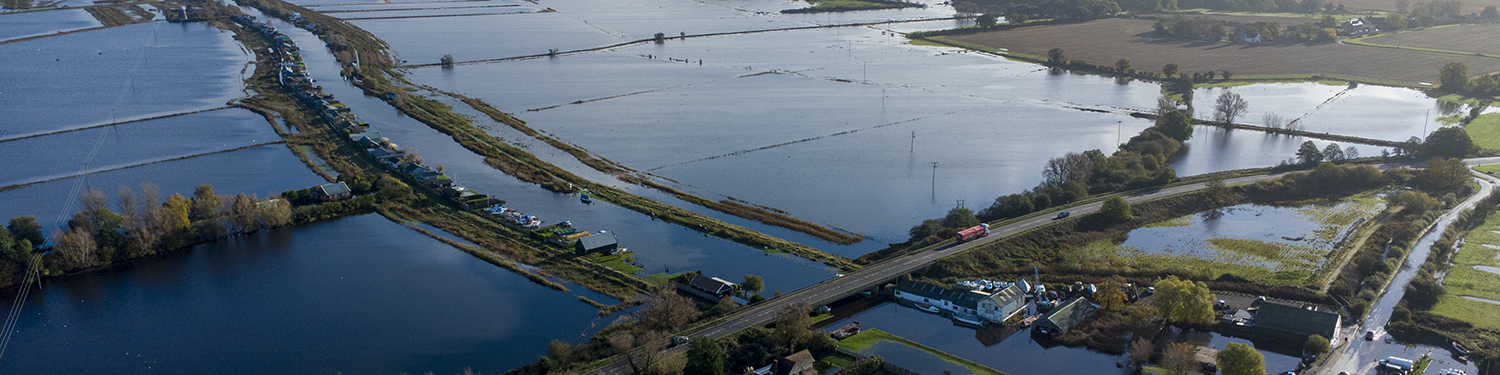
Many areas of the Broads are below present-day sea level – living, working and enjoying the Broads is dependent on how water is managed. As our climate changes and sea levels rise, we need new approaches to keep communities safe, whilst looking after the natural environment that makes the Broads and related areas special.
The BFI Plan
The BFI Plan will provide a sustainable approach to flood risk management in the short, medium and long term (up to 2130) in the face of climate change.
Due to be completed and published in 2028, it will be a flexible, adaptive plan because although climate change is unavoidable, the rate and scale of change is uncertain. We will have thought through and prepared ourselves for different eventualities.
The projects resulting from the BFI Plan will seek to continue looking after what makes the area special, whilst being economically viable and technically deliverable.
Why the BFI matters
The BFI Plan will guide investment plans for all organisations involved in flood risk management within the BFI area. This means we have a joined-up approach that is as cost-efficient as possible. It’ll also be used by organisations in local planning, strategic planning, other land use and asset management planning and investment.
Through BFI, communities will understand their current and future flood risk, the investment decisions that organisations will be making, and feel confident in resilience measures they can take.
The BFI Plan Area
The Broadland landscape is a rich mosaic of wetland habitats, farmland, winding waterways, towns, villages, historic features, coastal beaches, dunes and low sandy cliffs. At its heart is the Broads National Park. The rivers flowing into and through this area drain around two thirds of Norfolk and much of north east Suffolk.
The coastal influence over this area should not be forgotten. Sea water infiltrates the northern Broads beneath beaches, while low-lying land from Eccles to Winterton faces significant flood risk. Tides entering the river network at Great Yarmouth and Lowestoft further shape conditions. Climate change is expected to raise sea levels, increase storm frequency, and intensify rainfall, adding to flood risk across the area. During winter, both the open coast and river systems remain highly vulnerable to flooding from the sea and rapid runoff through river valleys.
The Broadland landscape has been influenced and shaped over thousands of years by natural processes and by the way people have lived and worked. Rising sea levels and a changing climate make the area increasingly vulnerable to the risks of flooding and erosion, with the local environment and economy increasingly reliant on flood defences.
Read about Origins of the plan area (PDF)
Partnership working and decision making
The Environment Agency have lead responsibility for BFI and bring together partner organisations.
The Initiative Project Team (IPT) membership is Flood Risk Management and Local Planning Authorities. It also includes statutory and other organisations with water, nature and conservation responsibilities across the Broadland area. As of October 2025, member organisations are:
- Broads Authority (IPT Chair)
- Environment Agency
- Norfolk County Council
- Norwich City Council
- South Norfolk Council
- Broadland District Council
- Suffolk County Council
- Great Yarmouth Borough Council
- Water Management Alliance (Internal Drainage Board)
- Anglian Water
- Norfolk Strategic Flooding Alliance
- Natural England
- Norfolk Wildlife Trust
- National Farmers Union
- National Trust
- RSPB
- Historic England
The IPT is a steering group which reviews and gives feedback on the outputs produced by the BFI programme. Using their and their organisations’ areas of technical knowledge and expertise, they will provide strategic and tactical advice on programme direction and delivery, with the goal to endorse and adopt the BFI Plan in 2028.
The BFI is also working with local communities and other stakeholders to identify the way forward. This will be a democratic process, with local politicians making the core decisions to agree a framework for future flood risk management that better copes with our changing climate.
The decisions made must be acceptable for our local communities, for the environment, and be technically possible and affordable. The cost of future flood risk management will require local as well as government funds, and we will need to identify where the money will come from.
Our Elected Members Forum (EMF) brings together an elected representative from each of the local authorities in the BFI area. Their role is to review Initiative progress, provide a strategic steer to the work of the Initiative Project Team, and reach agreements based on financial, environmental and technical evidence for the local authorities to endorse.
Minutes of IPT and EMF meetings in 2024 and 2025 are available in the sidebar. For meeting minutes pre-2024, please contact us by emailing info@broadland-futures.org.uk.
What work has been done to date and next steps?
A summary of our work so far
- In-depth work to understand the BFI Plan area and what is happening now with flood risk management, as well as funding.
- Read more about sources of flood risk and management (PDF)
- Read more about what the management of flooding influences (PDF)
- Read more about climate scenarios and timeframes (PDF)
- Read more about the flood risk funding challenges and opportunities (PDF)
- We’ve engaged to understand what people value most about the Broadland area and agreed the BFI objectives – what the BFI Plan will achieve
- Read more about the BFI objectives (PDF)
- We’ve generated and engaged on a toolkit of 16 possible generic flood risk management action types which have been grouped into pathways
- Read more about the flood risk management toolkit and pathways (PDF)
Next steps
Autumn 2025: Work is currently underway within the BFI team to use our new river and coastal models to understand how the occurrence, depth, and extent of flooding could change in the future. The modelling will also indicate how well different combinations of flood management actions perform to address flood risk under future climate change scenarios.
Later in 2026, we’ll engage more widely to explain what those modelling outputs are showing us and to explore potential opportunities linked to future flood risk management actions.
Read more about our steps to develop the BFI Plan in our Frequently Asked Questions (PDF).
Other useful links and longer reads
Below are links to longer and more detailed versions of reports produced earlier in BFI, as well as links to useful videos:
- An introduction to the Broads landscape video
- The Sources and Nature of Flood Risk within the BFI Plan Area
- Coastal Processes within the BFI Plan area
- Current approaches to flood risk management (PDF)
- The influence of flood risk management within the plan area (PDF)
- The future impacts of climate change (PDF)
- BFI - Dredging video
- BFI - Hydraulic modelling video
- Broadland Bure Loop Dredging Scenario Technical Note Summary (PDF)
- Privacy notice - Our privacy notice to ensure our continued compliance with General Data Protection Regulations 2018. Click on the link to read our privacy notice and to view our full policy wording via the links within the document.
Contact the Broadland Futures Initiative Team
Before contacting us, please feel free to read our Frequently Asked Questions document (PDF) where you may find the answer you are looking for.
If you wish to be kept informed about the project or still have any questions you can get in touch with the Broadland Futures Initiative using the contact details below:
Broadland Futures Initiative
c/o Broads Authority,
Yare House,
62-64 Thorpe Road,
Norwich, Norfolk
NR1 1RY
Broadland Futures Initiative Newsletters
- December 2023
- Spring 2024
- Autumn 2024
- Summer 2025
- Summer 2026
- Contact us for earlier editions
Project team meeting minutes
- 05 February 2024
- 25 March 2024
- 20 May 2024
- 22 July 2024
- 09 September 2024
- 04 November 2024
- 20 January 2025
- 10 March 2025
- 28 April 2025
- 23 June 2025
- 11 August 2025
- 06 October 2025
- 01 December 2025
- 15 April 2026
- 01 June 2026
- Contact us for earlier minutes
Elected Members Forum minutes
- 15 January 2024
- 22 April 2024
- 14 October 2024
- 08 May 2025
- 10 July 2025
- 23 October 2025
- 15 April 2026
- 01 June 2026
- Contact us for earlier minutes